
Kalaripayattu Weapons: A Complete Guide to Ancient Martial Art Arms
KALARIPAYATTU WEAPONS: AN OVERVIEW
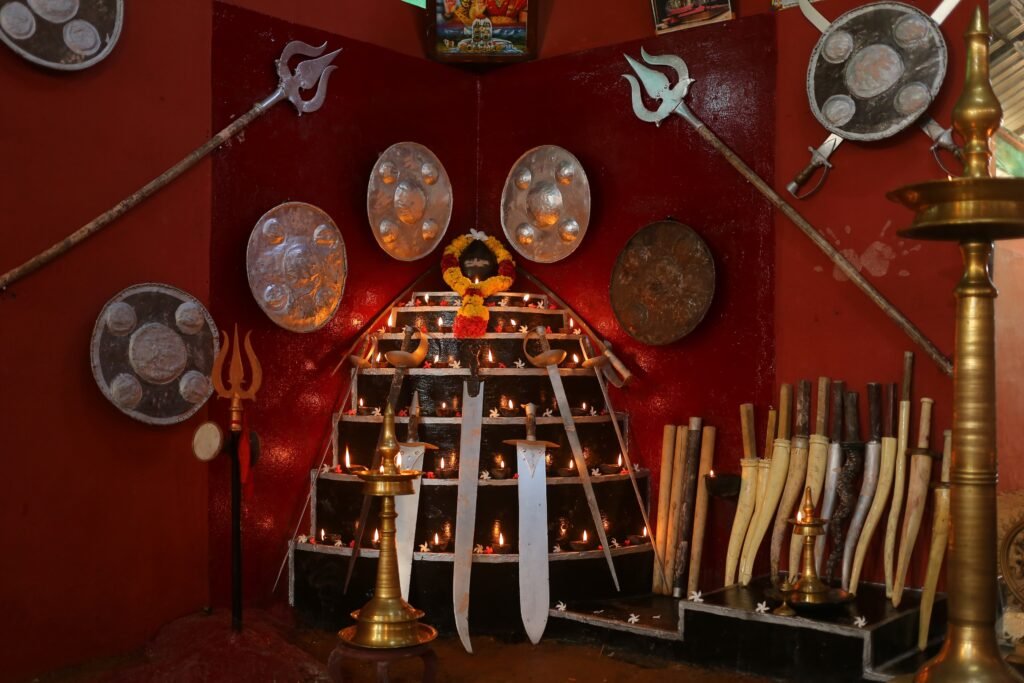
Weapons are essential to kalaripayattu, and is one of the more unique features of this form with certain weapons only found in the art like the Otta (curved knife made of wood) and the urumi (flexible blade). Within kalaripayattu the four basic phases of training that students must be proficient before they can become an expert: Meythari, Kolthari, Ankathari and Verumkai. Two middle-practices, Kolthari and Ankathari, require the use of various kinds of weapons. Kolthari is the practice of using wooden weapons, while Ankathari is the use of metal weapons.
TYPES OF KALARIPAYATTU WEAPONS
Kalaripayattu weapons are generally divided into two categories, Muktham and Amuktham. Amuktham are weapons that stay in the hands and aren’t thrown. This covers the majority of weapons used in Kolthari and Ankathari as well as the majority of the weapons currently in use. Muktham is the term used to describe weapons that are thrown with hand, for example, the bow, spear and an arrow as well as the cakra. Cakra refers to a steel disc with an orbicular blade. The blade is throw (maiming or decapitating the targets on its way) and then returned to the user by way of a rope in the palm of the hand. The spear is a part of both groups.
1.Kolthari (Wooden weapons)
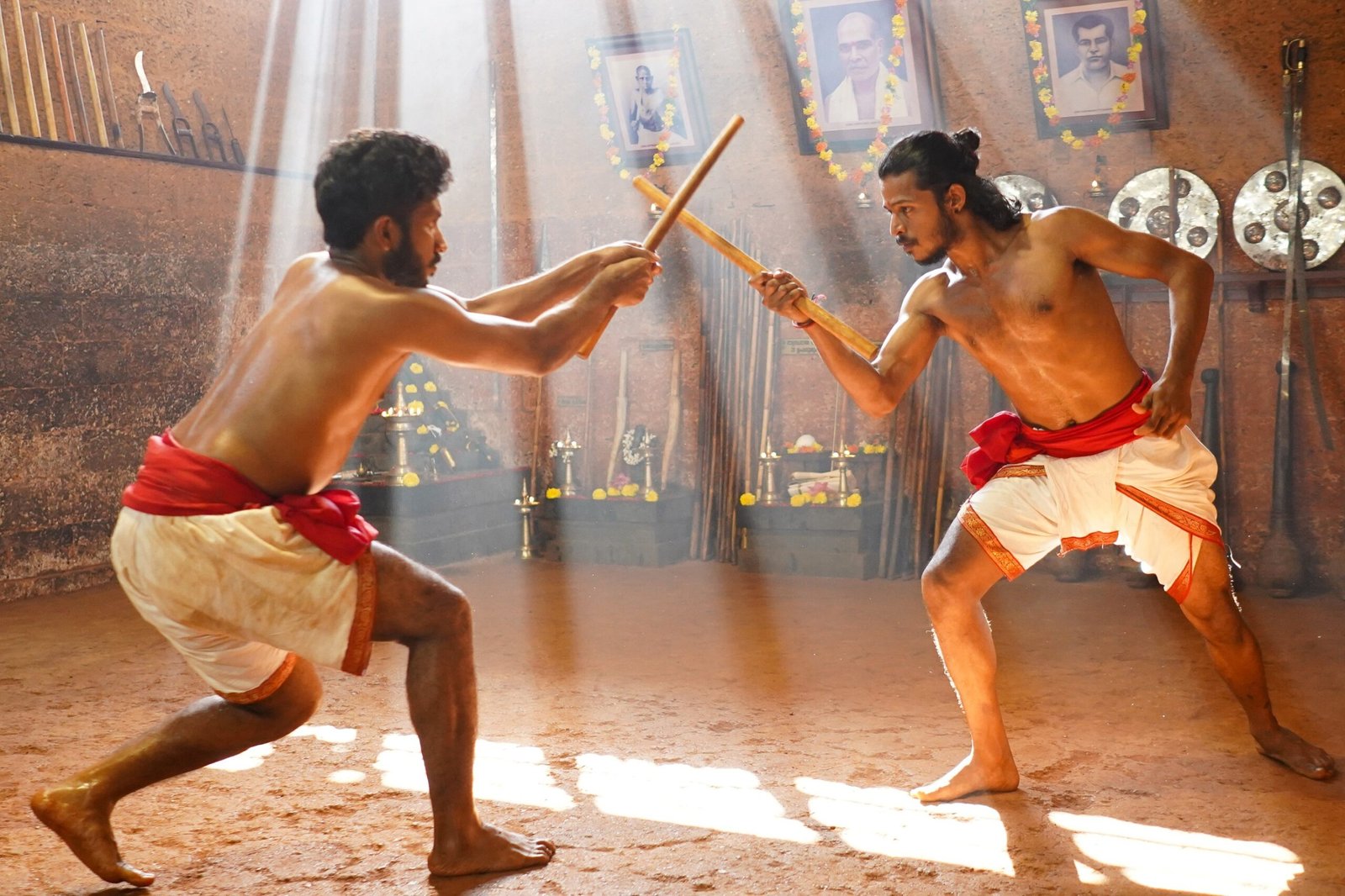
The second step of kalaripayattu and the initial stage of weapon-practice is known as Kolthari which is the practice of using wooden weapons. Every brand new weapon comes out at Gurukkal’s discretion and is listed below in the order of the teaching.
First weapon known as muchan, also known as the short stick that has three chan or handspans in length. Muchan literally translates to ‘three handspans’, while the word cheruvadi is a reference to’short stick’. It is used for quick attacks as well as defence.
2.Kettu kaari (long stick)
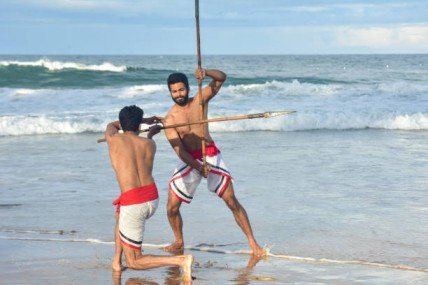
After the muchan, they advance to the kettu Kaari the kettu kaari, which is a thicker, longer weapon made of bamboo, or even cane. The stick should be at the length of the gurukkal’s gaze regardless of the height of the student. The force of rotation produced by this weapon is a formidable weapon and its length ensures an additional safety margin from your opponent.
3.Pandiraan veeshel (extra long stick)
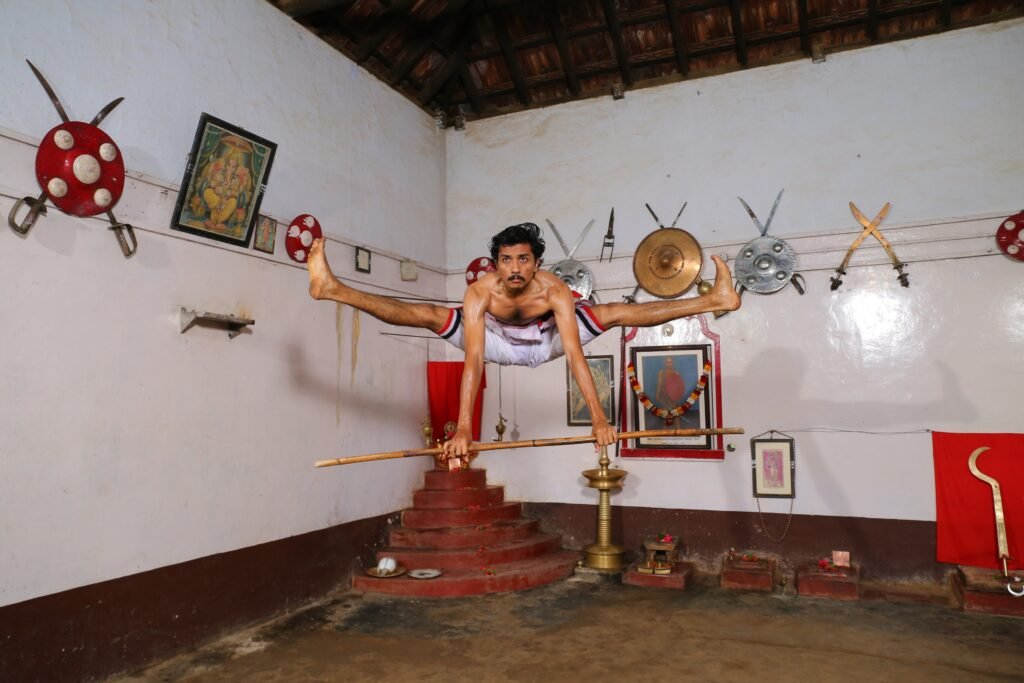
The weapon is 12 handspans more long, and it is a bit larger than the kettu kaari. It is used for fighting groups of enemies because it can cover the entire area of defense. It is a fast-moving weapon and, unlike the kettu kaari, just one end is employed that makes it possible to cover a wider area of protection. Experts in this weapon are able to get it to move so fast that you hear air breaking.
4.Otta (curved instrument)
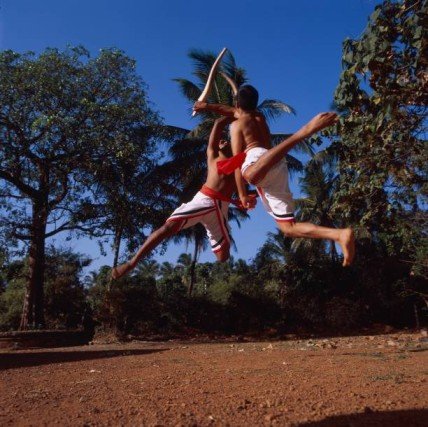
The most bizarre weapons in kalaripayattu The Otta is a long and curving weapon with a handle on one end, and a smaller club on the other. It’s intended to honour the strong the trunks of elephants that was used to fight the lion, as witnessed by Lord Shiva himself. This is why the otta weapon is employed as an elephant fighting weapon and is the only weapon used to perform this. It also has the marma attack, which means it strikes certain vital points of the body to take on the enemy.
5.Ankathari (Metyal Weapons)
All Ankathari weapons are constructed from steel, and occasionally other materials are used to make the handles, like copper or brass. In the past, Ayurvedic herbs were used in the process of forging to infuse extraordinary strength and other special properties into the metal. it was believed that they could smash roc
The first metal tools to be taught is the Kathi. Kathi training may employ various kinds of knives. In addition, two knives can be utilized simultaneously with one hand in each. There are a variety of knives available and what type is used is dependent on the available. Some of the most commonly that are used include kaimarakathi (handled knives) and the irettakathi (double-sided knife) Both are employed in Kadathanadan Kalari. Once the kathi is learned, the students will gain greater confidence when fighting and be able to discern the hand movements of an opponent much more instinctively.
6.Kathi (knives)
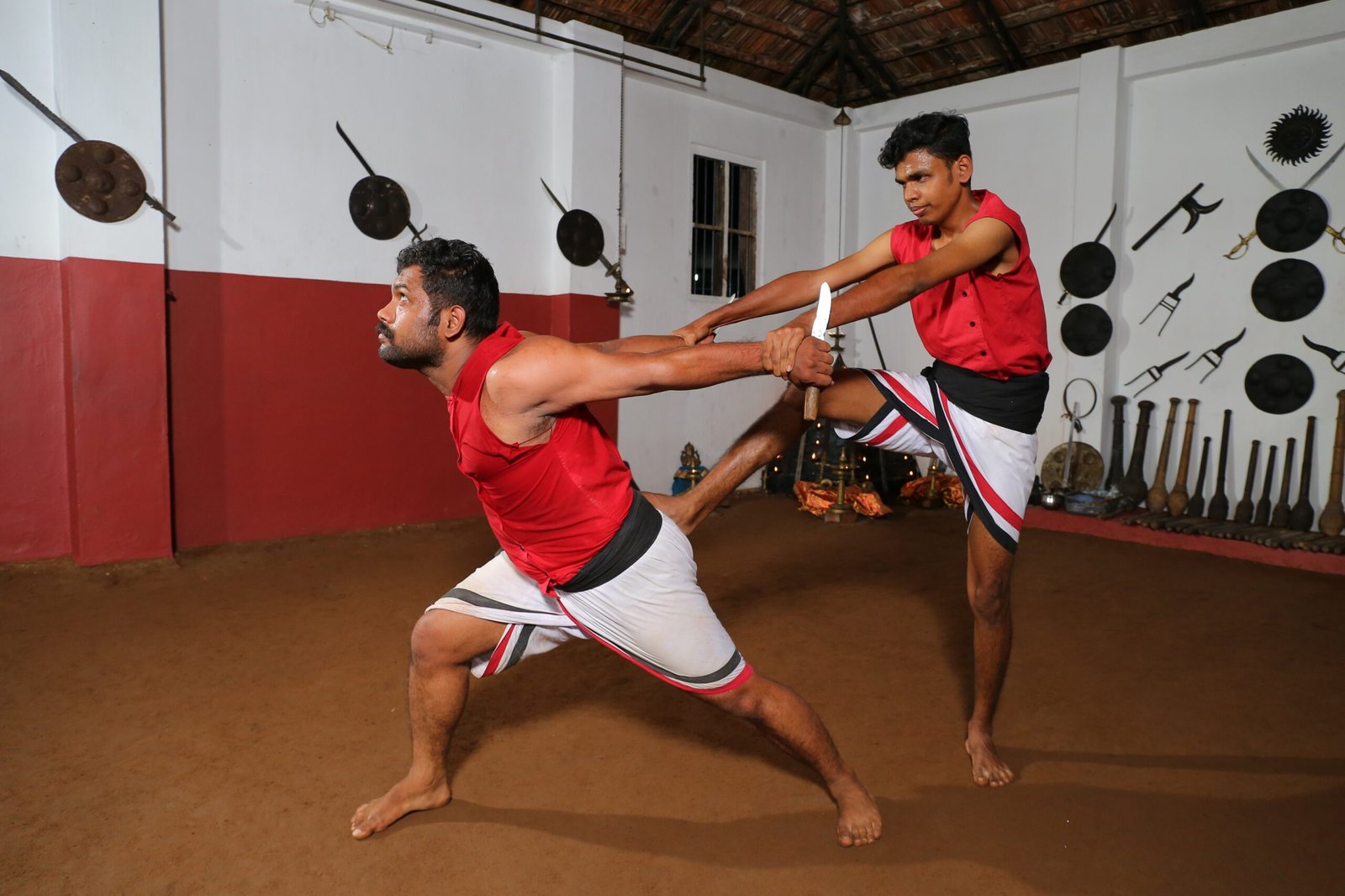
The first metal tools to be taught is the Kathi. Kathi training may employ various kinds of knives. In addition, two knives can be utilized simultaneously with one hand in each. There are a variety of knives available and what type is used is dependent on the available. Some of the most commonly that are used include kaimarakathi (handled knives) and the irettakathi (double-sided knife) Both are employed in Kadathanadan Kalari.
7.Kathiyum thalayum (knives as well as long cloth)
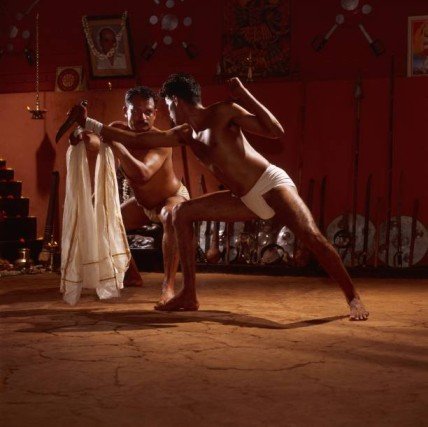
The Thala is a piece of cloth that is worn by the people of Kerala mostly worn as a belt, but can also be carried over the shoulders or worn on the head. It was popular in earlier times, up to around 100 years ago, but it is not used as often today with the exception of older people living in rural areas. The thala is used primarily in barehanded and knife combat as well as for blocking, as well as for tie up your opponent in various ways and throwing the thala. Sometimes, they’d connect the opponent’s body, causing them to be completely tied! The thala was a great tool for warriors to carry in situations where they were unable to carry weapons along like wedding events, or in the event that they were not armed and had no weapons, they could still carry the weapon, which was somewhat hidden. The thala was also known to ordinary people because it was part of normal clothing and could be incorporated quickly.
8.Kadara (dagger)
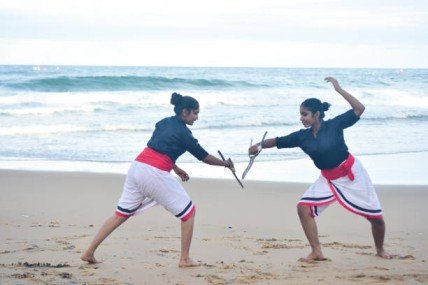
Kadara is only suitable for single-handed combat. The length is usually six angulam, also known as finger-lengths. Kathi and Kadara are taught as prerequisites prior to Verumkai (barehanded combat) is taught. It involves different kinds of locks, blocks grappling, jumps, divings and throws. Since it is a small weapon, the fighter has to be extremely close to his opponent which requires concentration physical strength and agility. Due to this, it is one of the guns that require concentration and focus needed the most.
9.Valum Parijaim (sword and shield)
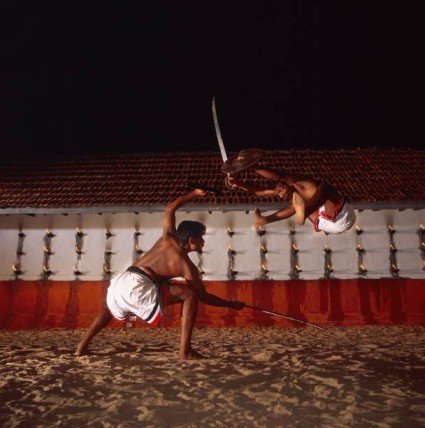
Valum parijaim was the most common arsenal of weapons that was used in the field. The most effective length for the weapon (sword) has 40 angulam (fingerwidths) about 70 cm/2 feet. The primary form of combat that is used in valum parijaim is puliyangam which is also known as the large cats variant (the word puli is used to refer to leopard, panther, and tiger in Malayalam as well as leopard). Puliyangam is a blend of different swords and strikes and defense with the shield, which is an imitation of the technique used in the puli. Training with this weapon allows the warrior to get used to sounds of weapons made of metal hitting each other, and will be able to overcome their fear and reactions to the sounds.
10.Urumi (long blade that is flexible)
A weapon that is known for its deadly force The urumi is considered to be one among the most deadly weapons in the Ankathari. The urumi’s two sides are sharp, the steel is strong, thin and pliable, and its length is usually equal to the height of an average human (the Gurukkal is normally used to measure height when creating). Because of the pliable nature and length of this weapon, it offers tremendous range and agility and, when handled by an expert, it’s believed to be able to cut an opponent into 7 pieces. Similar to the previous reasons, it requires a large amount of acuity for the player to avoid hitting themselves.
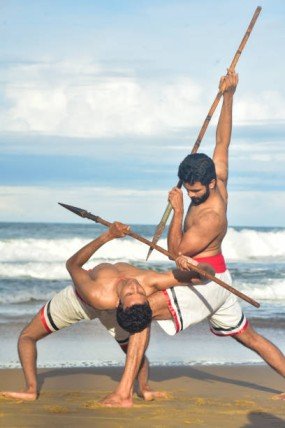
11.Marapidicha Kundam (spear as well as sword)
The marapidicha is one of the most deadly combinations of kalaripayattu weaponry, and it is also the most sophisticated. Kundam (spear) is at the height of a human (normally the height of a gurukkal) constructed from wood and has a spearhead of iron on the other end, typically around 1 1/2 feet/30-40cm in length. It is also the same one and shield described in the valum parijaim.
Conclusion
Kalaripayattu’s weapons are more than tools for combat, They are extensions to the martial artist’s physique and mental. Each weapon teaches an individual aspect of martial arts that ranges from precision and flexibility to strength and balance. Knowing these weapons will give one greater insight into the philosophy and technique of Kalaripayattu the art of martial arts with a spiritual dimension as well as physical.
FAQs
Q: What is the importance of the weapon training component in Kalaripayattu
A: Training in weapons is an essential component of Kalaripayattu and is generally taught after the student is proficient in the physical training. It is believed to be essential for acquiring higher levels of fighting and discipline.
Q:Do you know of specific rituals or ceremonies that are associated with weaponry in Kalaripayattu?
A: Yes Weapons are usually handled with respect and may be sanctified through specific rituals. They are thought by some to confer the weapon with spiritual power and provide the warrior with security and power.
Q: Can novices learn gun methods in Kalaripayattu?
A: Beginners typically begin with physical fitness and basic techniques in martial arts. Weapon training can be added at an advanced level when the person has shown sufficient physique fitness and discipline, and the ability to master the techniques that are not armed.
Q: Do you have physical or age limitations to learn weapon strategies in Kalaripayattu?
A: As with all martial art physical fitness and conditioning are crucial. Yet, Kalaripayattu is adaptable to all ages and physical abilities. The decision to practice with weapons is generally up to the discretion of the instructor depending on the students’ abilities and level of readiness.